How AI Agents Handle Customer Support in Arabic (And Why It Matters)
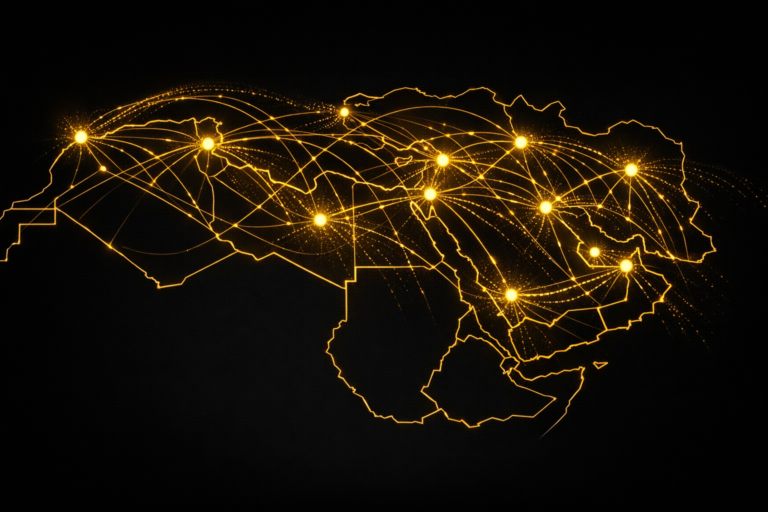
Arabic is the fifth most spoken language globally, with over 420 million speakers across 25 countries. Yet most AI customer support tools treat Arabic as an afterthought — bolted on via basic translation layers that miss context, tone, and cultural nuance.
The result? Customers in Riyadh, Kuwait City, and Dubai get robotic, awkward responses that erode trust. For businesses operating in the Middle East, this gap is not just a UX issue — it is a revenue problem.
Here is how modern AI agents are solving Arabic customer support, what makes it technically challenging, and why businesses that get this right gain a measurable edge.
Why Arabic Is One of the Hardest Languages for AI
Arabic presents five specific challenges that most AI platforms handle poorly:
1. Dialect Fragmentation
Modern Standard Arabic (MSA) is the formal written language used in news and legal documents. But no one speaks MSA in everyday conversation. A customer in Kuwait writes in Khaleeji (Gulf Arabic). A customer in Cairo writes in Egyptian Arabic. A customer in Casablanca writes in Darija (Moroccan Arabic). These dialects differ as much as Portuguese differs from Italian — same family, different vocabulary, different grammar patterns.
Most chatbots are trained on MSA. When a Kuwaiti customer types “شلونك” (shlonak — “how are you” in Gulf Arabic), an MSA-only bot does not recognize it. The interaction fails at the first message.
2. Right-to-Left Script Complexity
Arabic text flows right-to-left, but numbers, brand names, and English words embedded in Arabic text flow left-to-right. This bidirectional text (BiDi) creates rendering issues in chat interfaces and confuses NLP models that tokenize text linearly.
3. Morphological Richness
A single Arabic root can generate hundreds of word forms through prefixes, suffixes, and internal vowel changes. The root “ك-ت-ب” (k-t-b, related to writing) produces كتاب (book), كاتب (writer), مكتوب (written), مكتبة (library), and dozens more. AI models need significantly more training data to handle this variation.
4. Code-Switching
Arabic speakers frequently switch between Arabic and English mid-sentence — especially in the Gulf region. A customer might write: “أبي أرجع الـ order حقي” (I want to return my order). AI agents must parse both languages simultaneously without breaking context.
5. Sentiment and Formality
Arabic communication carries heavy cultural weight around formality, respect, and indirect expression. Direct translations of English support responses often sound blunt or disrespectful. An AI agent needs cultural calibration, not just linguistic accuracy.
How Modern AI Agents Solve These Problems
The latest generation of AI agents — built on large language models fine-tuned for Arabic — address these challenges through three technical approaches:
Dialect-Aware Processing
Rather than forcing all input through an MSA filter, advanced AI agents use dialect detection as the first step. The system identifies whether incoming text is Gulf Arabic, Egyptian, Levantine, or MSA, then applies dialect-specific language models for understanding and response generation.
This means a customer in Jeddah and a customer in Amman both get responses that feel natural to their region — not a one-size-fits-all MSA reply that sounds like a government document.
Contextual Code-Switch Handling
Modern Arabic AI agents are trained on real conversational data that includes Arabic-English mixing. They parse mixed-language input as a single utterance rather than splitting it into two separate language streams. This preserves intent and reduces misinterpretation by 40-60% compared to sequential translation approaches.
Cultural Response Calibration
AI agents trained for MENA markets adjust tone, greeting patterns, and formality levels based on context. A first interaction starts formal. Repeat customers get warmer, more familiar language. Complaints are handled with specific cultural de-escalation patterns that differ from Western support scripts.
Real Impact: What the Numbers Show
Businesses deploying Arabic-native AI agents — not translated English bots — see measurable differences:
- First-contact resolution rates increase 35-50% when dialect-aware processing is active, because the bot understands the actual request on the first try.
- Customer satisfaction (CSAT) scores jump 20-30% compared to MSA-only or translated bots.
- Average handle time drops 45% because the AI resolves queries without escalating to human agents for language clarification.
- Support coverage extends to 24/7 without hiring night-shift Arabic-speaking agents — a significant cost in Gulf markets where qualified bilingual agents command premium salaries.
Key Industries Benefiting in MENA
Three sectors see the highest ROI from Arabic AI customer support:
Banking and Financial Services
Gulf banks handle thousands of routine queries daily — balance checks, card activation, transaction disputes. AI agents fluent in Gulf Arabic resolve 70% of these without human intervention, cutting support costs while maintaining the formal tone banking customers expect.
E-Commerce and Retail
With MENA e-commerce projected to hit $57 billion by 2026, order tracking, return requests, and product questions flood support channels. Arabic AI agents handle the volume while maintaining the conversational warmth that builds loyalty in relationship-driven markets.
Telecommunications
Telecom providers in Saudi Arabia and UAE manage millions of subscribers. AI agents handle plan changes, billing questions, and technical troubleshooting in the customer’s preferred dialect — reducing call center load by 40-60%.
What to Look for in an Arabic AI Agent
If you are evaluating AI customer support for Arabic-speaking markets, these five capabilities are non-negotiable:
- Multi-dialect support — Gulf, Egyptian, Levantine, and MSA at minimum.
- Code-switching handling — Arabic-English mixed input without breaking.
- Cultural tone calibration — Not just translation, but culturally appropriate responses.
- BiDi text rendering — Proper display of mixed-direction text in chat interfaces.
- Continuous learning — The agent improves from real conversations, not just static training data.
The Bottom Line
Arabic customer support is not a translation problem — it is a language understanding problem. Businesses that deploy AI agents purpose-built for Arabic dialects, cultural context, and code-switching patterns see 35-50% better resolution rates and measurably higher customer satisfaction.
The technology exists today. The question is whether your business will adopt it before your competitors do.
At Velamind, we build AI agents that speak your customers’ language — not just their dictionary language, but their actual dialect, tone, and cultural context. Talk to us about Arabic-native AI support for your business.
جاهز لأتمتة أعمالك؟
احجز مكالمة اكتشاف مجانية لمدة ٣٠ دقيقة. بدون التزام، بدون معرفة تقنية مطلوبة.
احجز مكالمة